 이 누리집은 대한민국 공식 전자정부 누리집입니다.
콘텐츠 영역
H.E. Ambassador Sajdik, President of ECOSOC,
H.E. Ambassador Talbot, Co-facilitator for the preparatory process of the 3rd International Conference on Financing for Development,
Under Secretary-General Wu,
Distinguished representatives,
Ladies and gentlemen,
I am delighted to welcome all of you to Incheon. This city was a gateway between Korea and the world when its ports opened in the 19th century. Now, it has become the springboard of a new Asia-Pacific age, a metropolis with its eyes on the future, and a welcoming host of international organizations.
The growth of Incheon mirrors the development of Korea, making it the perfect venue for today’s Symposium. Back in 1953, when I was born, Korea was a war-torn, aid-dependent nation. The ensuing decades of growth has led us to Korea’s today, and has given us an extraordinary commitment and passion for development cooperation. So it means a lot to me, to co-chair today’s meeting as the Foreign Minister of a recipient-turned-donor country, in our common journey for sustainable development.
Ladies and gentlemen,
This year marks the 70th anniversary of the founding of the United Nations. Potentially, it can become a historic year in its own right, a landmark year in the UN’s pursuit of its key objectives: peace, development and human rights. Our ambitious agendas – to set the post-2015 development agenda and to reach a new global climate change accord – will define not just the world we live in, but the world of our children.
In this regard, today’s symposium is timely and significant in driving the momentum to reach new sustainable development goals, as it is the final symposium in the run-up to the Addis Ababa conference and the New York Development summit. Furthermore, the Millennium Development Goals’ target date is fast approaching. Despite the fifteen year-long efforts and many successes, the bitter reality is that the “bottom billion” still suffer from crushing poverty. And in terms of equality, access to justice, and the environment, there are major gaps to be filled.
Indeed, we are living in a paradox, where our way of life is undermining our life and our planet. The linear economy structure i.e., the pattern of mass production, mass consumption and mass dumping is not only unsustainable, but it is also aggravating climate change and imperiling our future. It is in this context that we are trying to shape and sharpen our vision for a post-2015 world.
Ladies and gentlemen,
Last January in Davos, I took part in a leaders’ discussion group, “Defining the Imperatives for 2015.” Deputy Secretary-General Jan Eliasson, who chaired the discussions, asked me the first question: how would Korea contribute to sustainable development, the most important agenda for the UN this year?
My response was, we should ensure that the “three main stops for the 2015 roadmap” – the Financing for Development conference in July, the UN Development Summit in September and the UN Climate Change conference in December – should dovetail each other, and we should collaborate together.
Today’s symposium is being held as part of that continuum, to give impetus and create synergy in the discussions leading up to the post-2015 development agenda. The daunting question before us is “development cooperation for people and planet: what will it take?”
As I know you will engage and explore this question in its myriad aspects in the course of the next two days, instead of trying to supply answers, I will try to set the stage by sharing a few key words.
First, is partnership. The nature of international development cooperation is going through changes; the post-2015 development agenda is about taking an integrated approach on the social, economic and environmental factors. This has been translated into an unprecedented number of actors, pledges and means of implementation, working not only for poverty eradication and development, but for human dignity and environmental sustainability as well.
This is a welcome phenomenon. We should embrace and empower such enthusiastic participation, and align partnerships to bring out synergies. Traditional and emerging donor countries; recipient countries and international organizations; civil society and the private sector; we all need to encourage and engage with each other as partners in the journey for a universal agenda.
And with the rise of broader and newer kinds of partnerships in development cooperation, we should not shy away from deploying new tools that fit the changing circumstances. In the fifteen short years since the MDGs, we have seen sea changes in technology. So, how can we use the data revolution and non-financial means of implementation to help us turn challenges into opportunities? How can various pledges be linked with means of implementation?
By tackling such problems and coming up with possible solutions, this Symposium can provide an enabling policy environment and eliminate bottlenecks in development cooperation.
Second, is universality. All voices have been calling for a universal post-2015 agenda. In this sense, whether we attain universality could make or break the post-2015 system. Just as we have no ‘planet B,’ we have no ‘plan B’ except for a universal, win-win agenda for sustainable development.
For this, we need renewed global solidarity. Yes, achieving a universal agenda will be more difficult. But the process of working together for a global development cooperation model that puts people and planet at the center can actually serve as a catalyst in strengthening international solidarity.
In this regard, Secretary-General Ban Ki-moon has been urging a post-2015 agenda that is more than an MDG sequel, with the message that quote, “commitments without empowerment are words without meaning. Solidarity is crucial to solving problems in our interconnected world,” unquote.
Third, is coherence and cross-linkages. There is a real need for improving coherence among various approaches and enhancing connectivity among different issues. Global issues such as the Ebola outbreak, humanitarian crises including refugees, food and energy security are often closely linked, and can be best solved through a comprehensive, inclusive approach.
And in my view, this is how we should approach the many upcoming events to be held in the run-up to the post-2015 Summit in September. The key is connecting the fragmented dots to an integrated whole, to weave the different strands into a harmonious unity that is bigger than its parts.
And it is in such a spirit that following today’s symposium, Korea will host the World Water Forum next week, and the World Education Forum in May. As an emerging development partner, we wish to connect and synergize the key elements of the post-2015 agenda by holding these global events. This is in addition to our efforts to promote effective development cooperation through the Busan Global Partnership.
Ladies and gentlemen,
This year, as the curtains fall on an era, we are building a new stage. During the past three years, we have come together to reach our goal. Now, we are on the final stretch. The remaining five months are a golden opportunity to bring our wisdom together, to forge a harmonious partnership for development cooperation.
So, today and tomorrow, let us explore constructive and creative ways in making development cooperation work for people and planet.
Thank you.
정책브리핑 공공누리 담당자 안내
닫기
문의처 : 문화체육관광부 정책포털과
| 뉴스 |
|
|---|---|
| 멀티미디어 |
|
| 브리핑룸 |
|
| 정책자료 |
|
| 정부기관 SNS |
|
※ 브리핑룸 보도자료는 각 부·처·기관으로부터 연계로 자동유입되는 자료로 보도자료에 포함된 연락처로 문의
※ 전문자료와 전자책의 이용은 각 자료를 발간한 해당 부처로 문의
이전다음기사
다음기사2015 DCF 고위급심포지엄 개회사(국문)정책브리핑 게시물 운영원칙에 따라 다음과 같은 게시물은 삭제 또는 계정이 차단 될 수 있습니다.
- 1. 타인의 메일주소, 전화번호, 주민등록번호 등의 개인정보 또는 해당 정보를 게재하는 경우
- 2. 확인되지 않은 내용으로 타인의 명예를 훼손시키는 경우
- 3. 공공질서 및 미풍양속에 위반되는 내용을 유포하거나 링크시키는 경우
- 4. 욕설 및 비속어의 사용 및 특정 인종, 성별, 지역 또는 특정한 정치적 견해를 비하하는 용어를 게시하는 경우
- 5. 불법복제, 바이러스, 해킹 등을 조장하는 내용인 경우
- 6. 영리를 목적으로 하는 광고 또는 특정 개인(단체)의 홍보성 글인 경우
- 7. 타인의 저작물(기사, 사진 등 링크)을 무단으로 게시하여 저작권 침해에 해당하는 글
- 8. 범죄와 관련있거나 범죄를 유도하는 행위 및 관련 내용을 게시한 경우
- 9. 공인이나 특정이슈와 관련된 당사자 및 당사자의 주변인, 지인 등을 가장 또는 사칭하여 글을 게시하는 경우
- 10. 해당 기사나 게시글의 내용과 관련없는 특정 의견, 주장, 정보 등을 게시하는 경우
- 11. 동일한 제목, 내용의 글 또는 일부분만 변경해서 글을 반복 게재하는 경우
- 12. 기타 관계법령에 위배된다고 판단되는 경우
- 13. 수사기관 등의 공식적인 요청이 있는 경우
히단 배너 영역



정책 NOW, MY 맞춤뉴스
정책 NOW

인기, 최신, 오늘의 영상 , 오늘의 사진
인기 뉴스
-
 BTS도 '21세기 대군부인'도 찾은 'K-풍류' 성지
-
 청년도약계좌와 청년미래적금 비교해요! 갈아타는 건 '6월만' 허용
- [보도해명·설명자료] 「'음란물 유포' 전과 1범을 여성 국무총리로 지명한 이재명」 게시물 관련 해명·설명자료
-
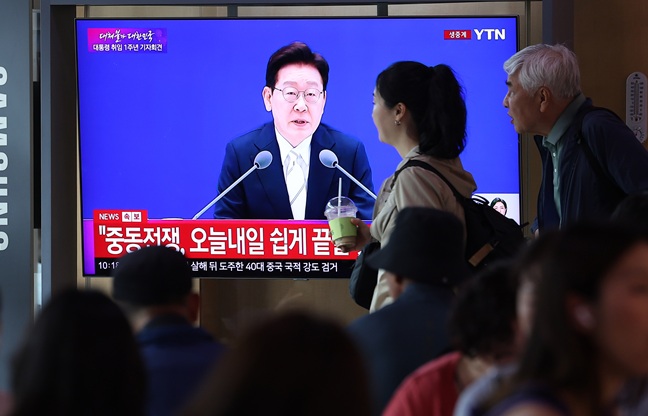 이 대통령 "올해 '대체 불가 대한민국' 꿈 시작"…4대 국정목표 제시
-
 캘박! 청년미래적금 가입신청 일정 안내
-
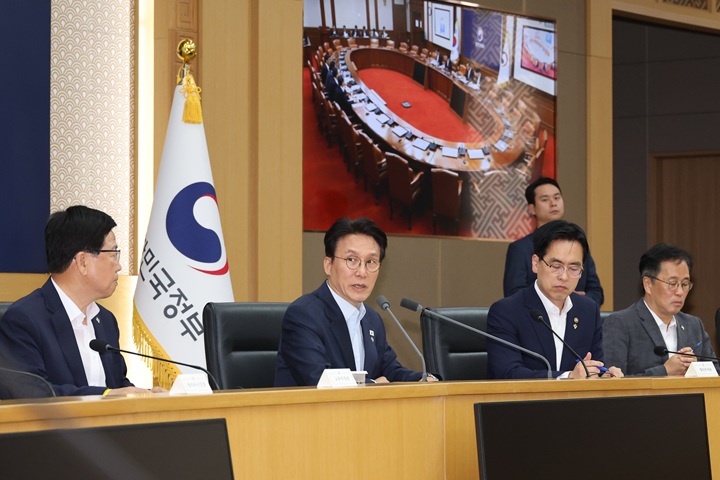 정부, 국민참정권 침해 사태 진상 규명·선관위 개혁 위해 모든 조치
-
 첫 48개국 월드컵 다시 한번 '대~한민국'
-
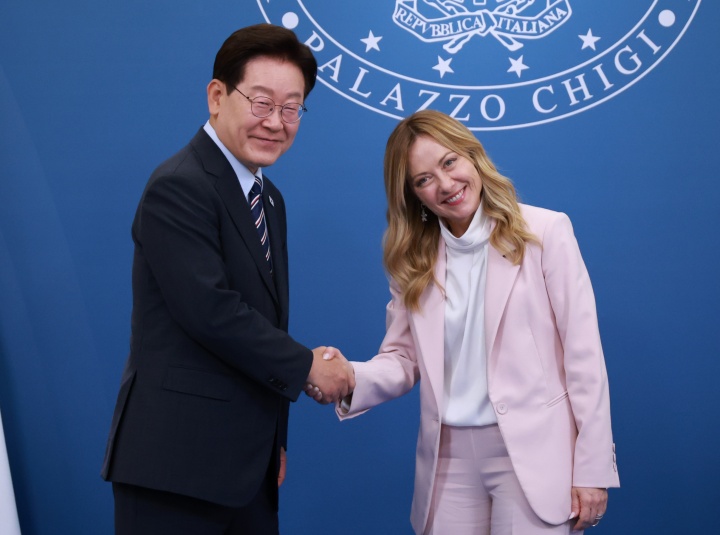 이 대통령, 멜로니 이탈리아 총리와 공식회담…"양국 협력 관계 더욱 강화"
-
 선생님 잠깐 STOP! 학교 물건 해외직구? 안돼요!
-
 반복·특이 민원 대응, 개인 아닌 기관이 책임…공무원 보호 강화
최신 뉴스
- 한미일 사무국 운영이사회 및 북한 관련 한미일 협의 개최(6.12.)
- 올여름 폭염 대비 무더위 쉼터 운영 현장점검
-
 이 대통령 "한-이탈리아는 최적의 파트너…글로벌 불확실성 함께 헤쳐나가야"
-
이 대통령, 멜로니 이탈리아 총리와 공식회담…"양국 협력 관계 더욱 강화"
- 산업통상부 정례브리핑
- 양산국유림관리소, 농경지와 산림 동시발생 돌발해충 협업방제 실시
- 정성호 법무부 장관, 의정부보호관찰소 방문
- 소방청 차장에 최용철 소방정감 임명
- [보도자료] 생명대사 '정승제' 등 자살예방 활동
-
 달라진 제도 속 더 커진 역사 교육의 의미 '한국사능력검정시험 도전기'



정책포커스
