Welcoming Remarks by H.E. Cho Hyun
Minister of Foreign Affairs at the Official Dinner of the Jeju Forum (June 25)
Distinguished participants, Ladies and Gentlemen,
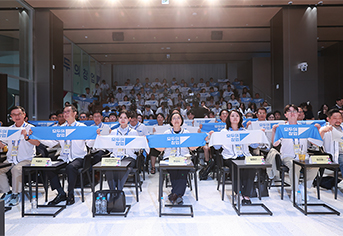
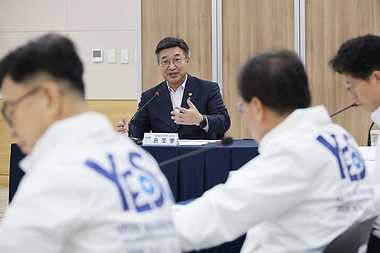
It is my distinct privilege to host this evening's dinner at the 21st Jeju Forum.
Over the past two decades, the Jeju Forum has been making its presence felt as an important platform for dialogue on peace and prosperity.
As the fabric of peace and the underpinnings of shared prosperity unravel around the world, the message from Jeju is bound to resonate even more in the coming years.
The last time I attended the Jeju Forum was in 2018. As the then vice minister, I had spoken about building a peace regime on the Korean Peninsula. Sadly, building a peace regime still remains a work in progress.
So I am all the more gratified to return to Jeju today as Foreign Minister, especially when the Foreign Ministry is co-hosting the Forum for the first time. The decision to do so stems from the belief that a country aspiring to more globally responsible roles needs a platform through which it can communicate its vision.
At the outset of this year, few had any illusions that this would be a year of calm. After all, the norms and institutions that have long underwritten the rules-based international order have been fraying for some years.
But very few had anticipated the sheer scale and intensity of the developments that rocked the world since the early weeks of 2026 — whether in the Middle East, Latin America or Europe.
Paradoxically, the Indo-Pacific ― a region many had feared would become the next geopolitical flashpoint ― has so far maintained a degree of stability.
Indeed, the two most powerful countries are working to constructively bring strategic stability to their relationship.
But this relative calm in our region should not be taken for granted. Should peace and stability falter even in the Indo-Pacific, the world could experience disorder and turmoil on a scale not seen in more than three quarters of a century.
It is against this backdrop that this year's theme — 'Reinventing Cooperation in a Fragmented World' could not be more timely or urgent.
The Republic of Korea is guided by three priorities as it navigates this turbulent era.
First, preventing war and promoting peaceful coexistence.
In today's complex geopolitical environment, preventing the Korean Peninsula from becoming another geopolitical flashpoint is of paramount importance.
This is why ensuring peace and stability on the Korean Peninsula remains our foremost priority. We believe that easing tensions, rebuilding mutual trust, and creating conditions for dialogue are essential steps toward achieving lasting peace and coexistence on the Peninsula.
As long as peaceful coexistence between South and North Korea, or between the US and China, can be sustained through appropriate mechanisms, it should matter less whether the peace is cold or warm.
At the same time, we remain firmly committed to the denuclearization of the Korean Peninsula, which is an indispensable element of lasting peace. However difficult this goal may appear today, we are pursuing a phased and practical approach to reach that goal.
We also seek to prevent the hardening of bloc-based rivalries across Northeast Asia by working more closely with both China and Japan. What the world needs today is more dialogue, not less. Dialogue among rivals and among adversaries should be seen as a sign of strength, not weakness.
We hope for the same as it relates to conflicts beyond our region. Korea sincerely hopes to see an early and peaceful resolution to the crises in Ukraine and the Middle East.
In particular, we welcome the important progress achieved through the recent U.S.-Iran talks in Switzerland and hope that it will pave the way for the restoration of peace and stability in the region.
Second, building up our strength and building out our partnerships.
History teaches us that true security does not come from prevailing in a fight. It is about creating conditions in which fighting becomes unnecessary.
Korea will continue to strengthen its ability to defend itself on the firm foundation of our evolving alliance with the United States.
At the same time, we will broaden strategic alignment with like-minded partners in this region and beyond.
President Lee Jae Myung's recent visit to European countries — including Belgium, Italy, the Holy See and France — and his participation in G7 summit meetings for two straight years are emblematic of this commitment.
Likewise, summit-level exchanges with critical partners including India, Vietnam, Singapore, and the Philippines underscore our determination to forge more robust partnerships with the Global South.
If the international order is to be upheld, not only must countries pull their weight, but those that do must increasingly work closely together across regions: not just among middle powers, but with powers both great and small.
Korea will be active in forging and participating in a variety of coalitions that serve our common interests.
Third, responsible global leadership.
Korea will serve as a bridge – connecting powers large and small, economies advanced and developing, as well as between different cultures.
To bolster this role, Korea will draw on our strengths in development cooperation, technology, and culture.
To ensure more bang for the development buck, Korea will enhance coordination to reduce fragmentation and waste among our development agencies. We will promote greater harmonization with development partners.
In addition, we will build on the APEC AI Initiative adopted last year and seek to establish a Global AI Hub in Korea. Innovation must benefit humanity as a whole rather than a privileged few.
We also hope that the sessions at this forum — bringing together international organizations and experts on climate and global health — will contribute to tangible progress in these areas.
Lastly, we hope that the global appeal of Korean culture can serve a higher purpose — not just as a source of entertainment around the world but also as a force that connects and enriches the lives of people across borders. In this context, the Ministry of Foreign Affairs decided to co-host this forum from this year on.
Distinguished Guests,
Ultimately, none of this is possible without the broader architecture of international cooperation that generations before us worked so hard to build.
In 1945, after the devastation of two world wars, the nations of the world came together to found the United Nations, vowing that such tragedies should never be repeated. That is how Security Council Resolution 82 came to be adopted on this very day 76 years ago, when war broke out on the Korean Peninsula.
Today, we have been joined by the 8th Secretary-General, H.E. Ban Ki-moon, the 9th Secretary-General, H.E. António Guterres, by video and the soon-to-be 10th UN Secretary-General. The past, present, and future.
Whoever assumes this mammoth responsibility as the 10th Secretary-General, Korea will work closely with her or him to make sure that the past does not become prologue — including here on the Korean Peninsula.
Before I conclude, allow me to share a reflection on the Haenyeo — the legendary women divers of Jeju whose culture is recognized as UNESCO's Intangible Cultural Heritage.
The Haenyeo plunge alone into the deep sea without air tanks, relying solely on a single breath: the ultimate expression of self-reliance.
After each dive, they gather around a traditional communal shelter to share their knowledge of the tides.
In the turbulence of today's world, their wisdom speaks directly to us. Self-reliance is certainly important, but sustainable peace can only be built on a foundation of solidarity.
With that, thank you and have a pleasant evening.
/END/
'텍스트'에 한하여 공공누리 출처표시의 조건에 따라 자유이용이 가능합니다.
단, 사진, 이미지, 일러스트, 동영상 등의 일부 자료는 문화체육관광부가 저작권 전부를 보유하고 있지 아니하므로, 반드시 해당 저작권자의 허락을 받으셔야 합니다.
 이 누리집은 대한민국 공식 전자정부 누리집입니다.
 '텍스트'에 한하여 공공누리 출처표시의 조건에 따라 자유이용이 가능합니다.