Keynote Address by H.E. Cho Hyun
Minister of Foreign Affairs of the Republic of Korea
"Seoul Diplomacy Forum 2026" Thursday, September 3, 2026
Your Excellencies,
Distinguished Guests, Ladies and Gentlemen,
It is a great privilege for being here, to return in person to this Forum
as a keynote speaker this year. I am going to talk about Korea's foreign policy after making my own assessment of the global landscape.
Before I begin,
I would first like to express my appreciation to Chancellor Kim Heungkyu for organizing this meaningful forum.
The global landscape is in a state of constant flux.
Uncertainty, unpredictability, and complexity are perhaps the defining features of the world we face today.
Wars in Ukraine and the Middle East are still ongoing, and geopolitical conflicts are escalating.
The global leadership
that has played a key role in sustaining the international order
can no longer be taken for granted, bringing more volatility to world politics.
Amid intensifying geopolitical competitions,
new technologies such as AI, and
economic factors like semiconductors and global supply chains,
are increasingly weaponized.
Low-cost drones are demonstrating significant tactical advantages,
even against far more expensive missile systems.
Political polarization is further deepening instability
in the international arena, eroding the credibility and consistency of foreign policy itself.
We live in a world like a moving labyrinth.
Simply navigating with an old map of the existing international order
is no longer enough to safeguard our national interests or international peace.
It is becoming more and more difficult to gain a clear picture of the path forward.
So we have to learn to read the changing map,
and create breakthroughs when encountering dead-ends.
At the same time, we must work together to establish clear rules of the game.
Let me move onto Korea's foreign policy.
No single country, however capable, can do this alone. This is where diplomacy comes in and it really matters.
Capable nations should assume greater responsibility,
leveraging their strengths to bridge divides
and forge common ground in addressing global challenges.
While we may not be able to redraw the map of global politics, we can certainly work to mitigate their most destabilizing effects.
Over the years, Korea has cultivated such capabilities.
Korea has spent decades building the strength and resilience
to overcome adversity and turn challenges into opportunities.
Our economic strength, security posture, technological expertise,
and cultural influence
equip us to play a yet more active role in promoting peace in the region.
To put these hard-earned assets into action,
we are pursuing diplomacy through a pragmatic lens.
As for Korea, our strategy rests on three mutually reinforcing pillars:
deepening our alliance with the United States,
strengthening our own capabilities,
and broadening our partnerships with the world. These are the principles of Lee Jae Myung government.
Let me start with the alliance.
The ROK-U.S. alliance, the key anchor of Korea's robust security, has long been vital for peace and stability in the region.
We are working to modernize the alliance
into a future-oriented, comprehensive partnership.
And we are expanding cooperation beyond traditional security
into areas where Korea can make its own distinctive contribution.
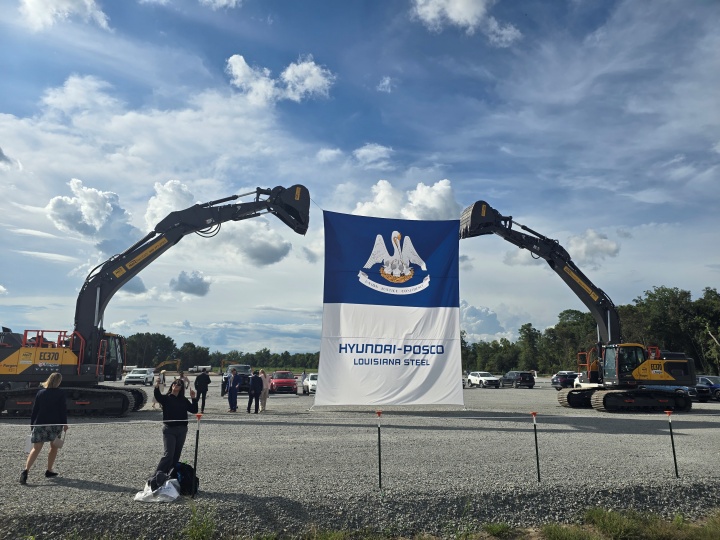
Such as civilian nuclear activities, AI, semiconductors, and shipbuilding.
The alliance also provides an important foundation for our diplomatic efforts on the Korean Peninsula.
Ensuring peace and stability on the Korean Peninsula
is among our government's top priorities.
To this end, Korean government remains committed to
realizing "Peaceful Coexistence on the Korean Peninsula"
while easing tensions and building trust with the DPRK.
Even in the absence of a positive response from the DPRK thus far,
we remain steadfast in our efforts to resume dialogue.
We have proactively suspended loudspeaker broadcasts
directed at North Korea and dismantled related equipment.
Our proposal for inter-Korean working-level military talks is likewise part of our efforts to reduce accidental clashes.
At the same time, we will continue our diplomatic efforts to facilitate the resumption of the U.S.-DPRK dialogue.
In this regard,
we take note of President Trump's continued interest
in peace on the Korean Peninsula
and his willingness to resume dialogue with the DPRK,
as reflected in his recent messages.
We hope that the good relationship
between the leaders of the U.S. and the DPRK
will lead to a meaningful dialogue between the two.
We also expect that such dialogue will pave the way
for complete denuclearization and lasting peace on the Korean Peninsula. The Korean government will continue to closely coordinate with the United States in this regard.
Second, Korea also aims to further enhance its national capabilities.
This is a move that will empower Korea
to act as a yet more valuable partner within its alliance and broader partnerships.
Korea is reinforcing its defense posture,
including through the development of nuclear-powered submarines,
to help create the national security environment –
one where there is no need to fight. This is the mantra of President Lee Jae Myung.
We are also working with regional partners
to reinforce the broader security environment in Northeast Asia.
By strengthening ROK-U.S.-Japan cooperation
in tandem with Korea-Japan-China engagement,
we seek to foster a region where dialogue and cooperation can prevail over confrontation.
Continuous engagement at all levels, including high-level summits,
exemplifies this ongoing effort.
Most recently, when I received my Chinese counterpart,
Wang Yi, in Seoul, two weeks ago
I stressed the importance of countries in the region
working together in a spirit of mutual respect and close cooperation
But Korea's capabilities are not only about security.
Korea is also building up its capacity
to address shared global challenges –
from energy insecurity and the climate crisis
as we've seen in the recent tragic floods in Nepal and China,
to rapid technological transformation and growing supply-chain vulnerabilities.
To tackle climate change and energy security issues,
Korea is advancing cutting-edge technologies for future clean energy, including SMRs and clean-hydrogen production.
With a view to guiding new technologies in a desirable direction,
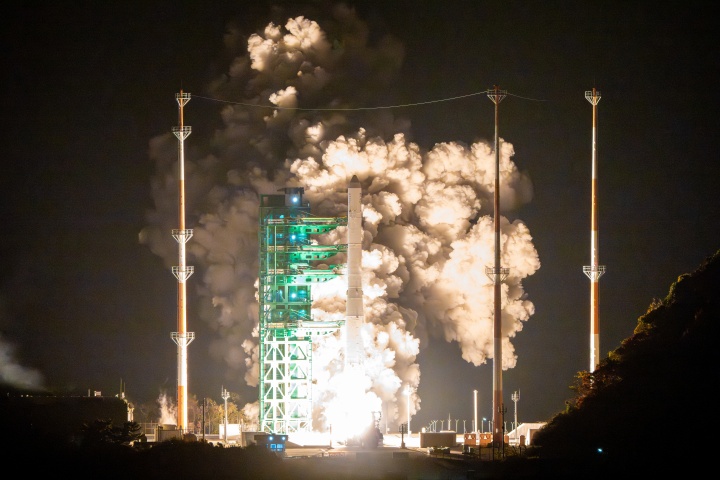
Korea is also investing in key frontier areas such as quantum computing and space science.
To make its economy more resilient, Korea seeks to strengthen
its processing and recycling capabilities of key minerals.
And through far-reaching diplomacy, we are diversifying our supply chains.
Ultimately, Korea aspires to become an indispensable partner –
a nation whose capability and contributions are highly valued
and sought after by major powers, middle powers,
and the countries of the Global South as well.
Third, Korea seeks to build a broad and resilient network of partnerships spanning diverse regions, groups, and sectors.
Korea's recent engagement in AI-related issues serves as a testament to this commitment.
Last November,
twenty-one distinct economies came together under a shared vision for safe and responsible AI.
And the APEC AI Initiative was adopted through Korea's proactive engagement and leadership.
Building on that momentum,
Korea launched the Korea-ASEAN AI Partnership Initiative this July, further expanding our cooperation with partners throughout the region.
Beyond AI,
Korea has also deepened its strategic partnership with ASEAN,
And our cooperation with ASEAN
now spans a wide range of areas,
from cultural exchanges to cybersecurity and the fight against transnational crime.
Furthermore,
Korea will host the inaugural ROK-Central Asia Summit in Seoul this month.
This summit will bring together the leaders of the five Central Asian nations
– Kazakhstan, Kyrgyzstan, Tajikistan, Turkmenistan, and Uzbekistan. It will provide a vital platform for deeper regional cooperation.
This momentum is part of a broader global trajectory in our diplomacy.
Distinguished Guests,
The challenges before us are formidable.
But they present also an opportunity –
An opportunity to build
a more resilient and inclusive international environment
in which countries are better empowered to address the challenges of our times.
New technologies and geopolitical competition
are reshaping world politics, including global governance and the international order.
But amid all this change,
we should not lose sight of the principles
that have guided the international community for decades:
These are democratic values, shared participations and principles, and the hard-earned lesson and most importantly that we should a wars.
It is in this spirit that today's forum comes at a most opportune time.
Korea stands ready to play its part in this effort.
We will work with our partners to advance cooperation and contribute to a more peaceful and resilient international order.
Ladies and Gentlemen,
I should stop here but if I may,
I would like to share just one idea that came into my mind.
We diplomats as practitioners and scholars as thinkers,
we always think about our national interests
and we are trying to identify and pursue them.
However, in this turbulent times,
I was just thinking that it became nothing else
to pursue our maximum interest.
We should think beyond the national interest,
which is long-term national interest,
or maybe enhanced or enlightened national interest.
What they are, how we defined them, I will leave it to you for today's discussion.
Trusting that this forum will yield meaningful outcomes,
I look forward to your continued support and partnership in this vital pursuit.
Thank you.
/END/
이 자료는 텍스트에 한하여 공공누리 제1유형(출처표시)의 조건에 따라 이용할 수 있습니다.
단, 텍스트를 제외한 사진·이미지·일러스트·동영상 등 자료의 대부분은 정책브리핑이 저작권을 보유하고 있지 않으므로, 이용 전 해당 저작권자의 허락을 반드시 받으셔야 합니다.
 이 누리집은 대한민국 공식 전자정부 누리집입니다.